

No products in the cart.


diametric disc magnet


Wholesale Diametrically Magnetized Neodymium Disc Magnet Diametric Rare Earth Cylinder Magnets Diametric Magnet
Price range: $3.76 through $25.95
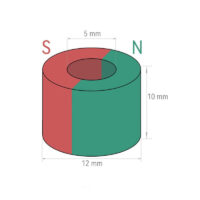
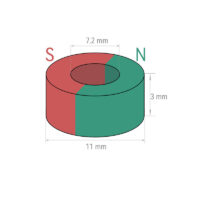
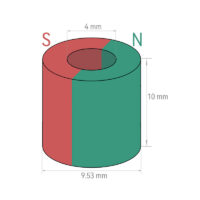
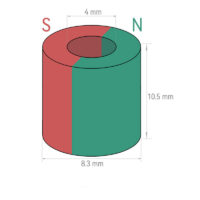
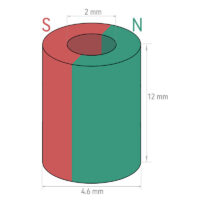
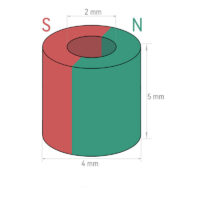
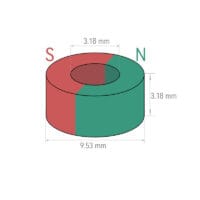
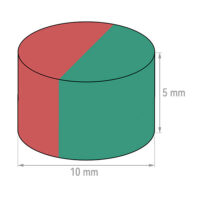
These disc magnets is DIAMETRICALLY magnetised, i.e. the magnetic field runs parallel to the diameter. This is an unusual magnetic direction for a disc magnet. We also carry identical disc magnets that are axially magnetised.
Diametrically magnetised magnets are often utilised in sensor technology or for magnetic couplings or switches.
Email us for even bigger discounts on higher order quantities.
🛈Payment Method
 The credit card schemes listed above are the most commonly used credit cards on this website. Do not worry if your credit card scheme is not listed, we encourage you to go ahead and make the purchase.Please note that UMAGNETS does not collect your credit/debit card number or personal information when you make a payment. For questions regarding your transactions on our site, please consult your card-issuing bank for information.Pay with PayPal
 The safer, easier way to pay.When you choose PayPal to pay, you will be redirected to the PayPal payment page, where you can confirm your payment by logging in with your PayPal username and password. You may still check out even without a PayPal account. To do so, please click on "Pay with Debit/Credit Card" and you’ll be redirected to a secure page where you can enter your credit card information or complete your payment safely via PayPal.If you don't want to create a new PayPal account, you can click "Cancel and return to UMAGNETS", go back to the shopping website, and choose another payment method.You can also pay via Sofort, Afterpay, Clearpay, iDeal, Multibanco, Boleto, OXXO if you don't have a credit card.
Pay With Debit & Credit Cards
 The credit card schemes listed above are the most commonly used credit cards on this website. Do not worry if your credit card scheme is not listed, we encourage you to go ahead and make the purchase.Please note that UMAGNETS does not collect your credit/debit card number or personal information when you make a payment. For questions regarding your transactions on our site, please consult your card-issuing bank for information.Pay with PayPal
 The safer, easier way to pay.When you choose PayPal to pay, you will be redirected to the PayPal payment page, where you can confirm your payment by logging in with your PayPal username and password. You may still check out even without a PayPal account. To do so, please click on "Pay with Debit/Credit Card" and you’ll be redirected to a secure page where you can enter your credit card information or complete your payment safely via PayPal.If you don't want to create a new PayPal account, you can click "Cancel and return to UMAGNETS", go back to the shopping website, and choose another payment method.You can also pay via Sofort, Afterpay, Clearpay, iDeal, Multibanco, Boleto, OXXO if you don't have a credit card.
Pay with Google Pay

Pay with Apple Pay

🛈Shipping & Delivery
International Shipments
We shipping magnets worldwide, including approx. 192 countries.Shipping Times and Costs
- Processing Time: Orders are processed within 1-2 business days. Custom orders may take longer, and you will be informed accordingly.
- Delivery Times: Delivery times vary based on location and the selected shipping option. Typical delivery times are as follows:
- Standard shipments: 7 - 12 business days
- Express shipments: 3 - 5 business days
- Shipping Costs: Shipping costs are calculated based on the weight and dimensions of your order and the shipping destination. You can see the shipping cost at checkout before finalizing your purchase.
In diametrically magnetised magnets, the magnetisation runs parallel to the diameter. This type of magnetisation is seldom used in the manufacture of magnets. Explore our assortment and buy diametrically magnetised magnets online for your projects. You can find additional information on our FAQ page about magnetisation directions.
Should you be unable to find a magnet with the desired dimensions in our shop, you can contact us for a custom-made product. The form can be completed and submitted entirely online. Once received, we will send you an offer as soon as possible.
Diametrically vs axially magnetised magnets
In addition to the standard axial magnetisation, we also offer you a small selection of diametrically magnetised magnets. In diametrically magnetised magnets, the axis of magnetisation runs parallel to the diameter. Imagine you are cutting a cake in half. In this case, the two cake pieces, left and right, would represent the north and the south pole. In axially magnetised magnets, on the other hand, the two poles are located on the circular surfaces of the magnets, i.e. top and bottom. This is comparable to two sponge cake bases that are resting on top of each other. The application possibilities for axially magnetised magnets are somewhat broader than those for diametrically magnetised magnets. You can find more information in our FAQ about magnetisation direction.
Advantages of diametrically magnetised magnets
Diametrically magnetised magnets have one big advantage when it comes to storage and handling: strong or very flat disc magnets are more easily separated. This is due to the fact that these magnets attract each other on the outer sides rather than on their generally larger, circular surfaces. It makes assembly easier. In addition, diametrically magnetised magnets have several poles along their circumference, allowing you to create more complex magnet arrangements than with axially magnetised magnets.
Areas of application for diametrically magnetised magnets
Diametrically magnetised magnets can be utilised in many ways. They are, for instance, used in sensor technology such as for Hall effect sensors or reed switches, among others. Often, diametrically magnetised magnets are also built into magnetic couplings as well as mechanical or electronic switches.
Application examples from our customer projects
Let yourself be inspired. In our large collection of customer projects, we have published some great projects with diametrically magnetised magnets:
Be the first to review “Wholesale Diametrically Magnetized Neodymium Disc Magnet Diametric Rare Earth Cylinder Magnets Diametric Magnet”
You must be logged in to post a review.
Related products

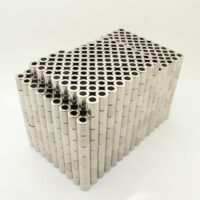
9.53 x 4 x 10mm DN
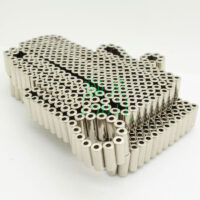
8.3 x 4 x 10.5mm DN
10x5mm Diametric
Price range: $5.99 through $15.99
Reviews
There are no reviews yet.